

 英语
英语 德语
德语 阿拉伯语
阿拉伯语

محتوى
في معظم الحالات، تزوير أقوى من الصب.
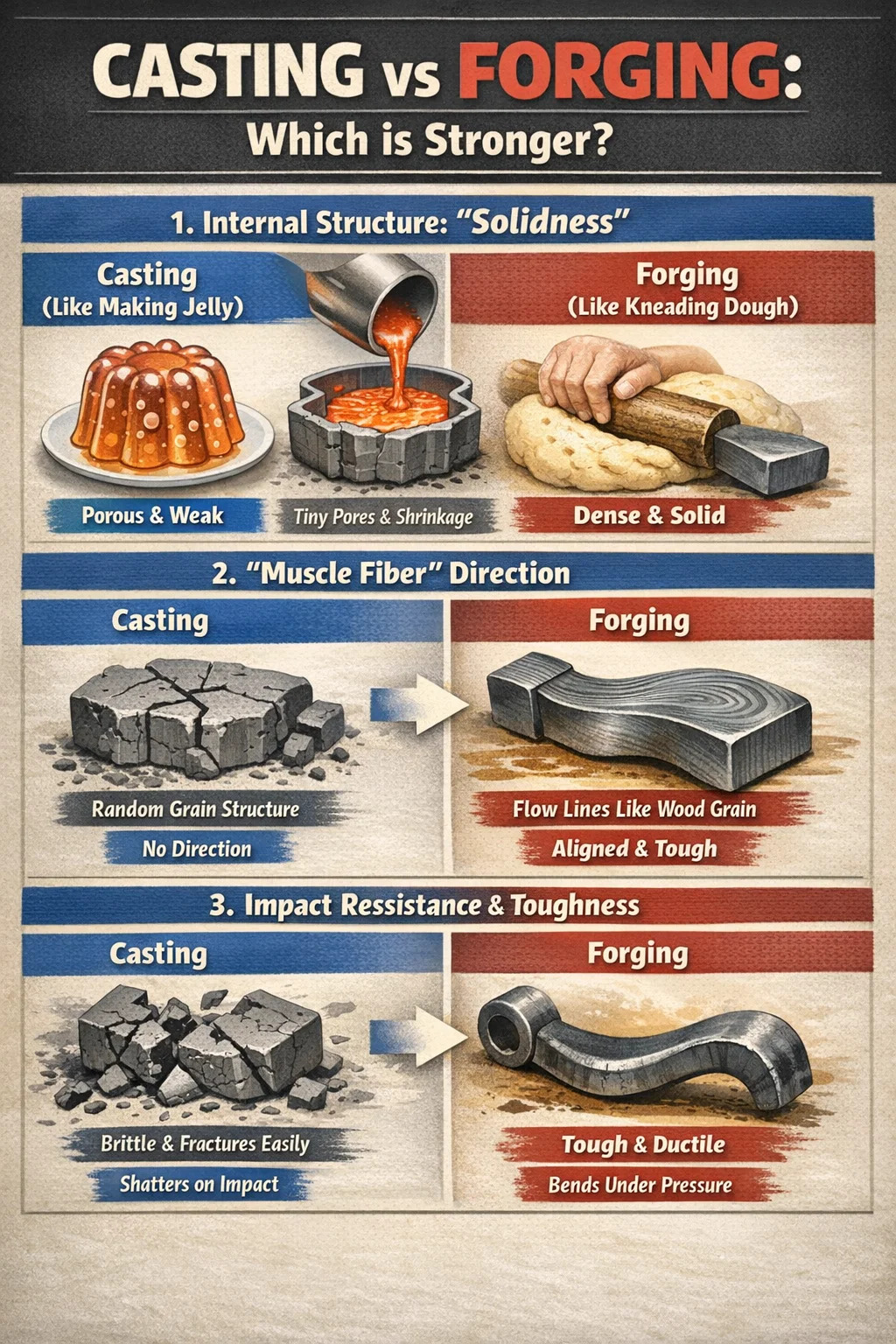
إذا قارنا المعدن بالمكونات الغذائية، فإن الصب يشبه "صنع الجيلي". تزوير الصلب هو مثل "العجن العجين". على الرغم من أن كلاهما يمكن أن يخلق الشكل المطلوب، إلا أن الكثافة الداخلية ومقاومة التأثير مختلفتان تمامًا.
فيما يلي مقارنة تفصيلية لـ "قوتهم":
1. "صلابة" البنية الداخلية
الصب (صنع الجيلي): يتم صهر المعدن في سائل وصبه في قالب. خلال هذه العملية، يختلط الهواء بالسائل حتماً، أو يحدث الانكماش أثناء التبريد. وهذا يؤدي إلى مسام صغيرة أو رخاوة داخل الجزء. هذه الثقوب غير المرئية هي نقاط ضعف محتملة يمكن أن تؤدي إلى كسور في المستقبل.
تشكيل الفولاذ (عجينة العجن): يتضمن التشكيل تشويه المعدن وهو لا يزال في حالة صلبة من خلال الضغط القوي. يضغط هذا الضغط على جميع مسام الهواء داخل المعدن، مما يجعل الهيكل كثيفًا للغاية. هذا الهيكل "الصلب" أقوى بشكل طبيعي من أجزاء الصب المسامية.
2. اتجاه "الألياف العضلية"
الصب: بعد أن يبرد السائل المعدني، يتم ترتيب الجزيئات الداخلية بشكل عشوائي، دون أي اتجاه.
تشكيل الفولاذ: لا يؤدي التشكيل إلى تغيير الشكل فحسب، بل يؤدي أيضًا إلى تدفق البنية البلورية الداخلية للمعدن على طول محيط الجزء، مما يشكل "خط تدفق" مستمرًا. وهذا يشبه الألياف العضلية في جسم الإنسان أو حبة الخشب؛ وتتضاعف القوة عند تطبيق القوة على طول الحبوب. يسمح هيكل خط التدفق الفريد من نوعه للمطروقات الفولاذية بأداء جيد بشكل استثنائي عند تعرضه للاهتزازات والتأثيرات المتكررة.
3. مقاومة التأثير والمتانة
الصب: عادة ما تكون أجزاء الصب "هشة" تمامًا. وعندما تتعرض لصدمة مفاجئة وعنيفة، فإنها قد تتحطم قبل أن تتاح لها الفرصة للتشوه.
تزوير: الفولاذ المطروق لديه صلابة ممتازة. عند تعرضه لضغط شديد، يمكنه امتصاص الطاقة من خلال تشوه طفيف بدلاً من الانكسار مباشرة. هذه "الصلابة" ضرورية للسلامة؛ على سبيل المثال، تتطلب أجزاء تعليق السيارات ومكونات المحرك المهمة دائمًا أجزاء مزورة.